The All-In Call You Keep Folding: Why PKO Tournaments Demand a Completely Different ICM Mindset
A lot of tournament players still carry over their normal late stage instincts into PKOs (Poker Knockout Tournaments), and that is where the leak starts. The fold can feel disciplined. It can even feel sharp. In a standard payout structure, preserving stack value often is the sharp move. In a PKO, the same fold can leave real money on the table because the hand is no longer priced by survival alone.
The key issue is that a PKO asks you to value two things at once. You are fighting for future ladder value, and you are also fighting for immediate cash tied to a player’s head (people invested in financial strategies in gaming know this very well). Those forces do not cancel each other out, but they reshape thresholds. They change who gets to pressure, who has room to call, and why chip coverage matters more than many players first think. Once you see that, the “tight fold” starts to look very different.
Why the bounty rewrites stack value
The heart of the mistake is easy to describe. Players treat a bounty hand like a regular tournament hand with a small bonus attached. In practice, the bounty changes the price of risk, the reward for covering, and the future value of your own stack once you win the pot.
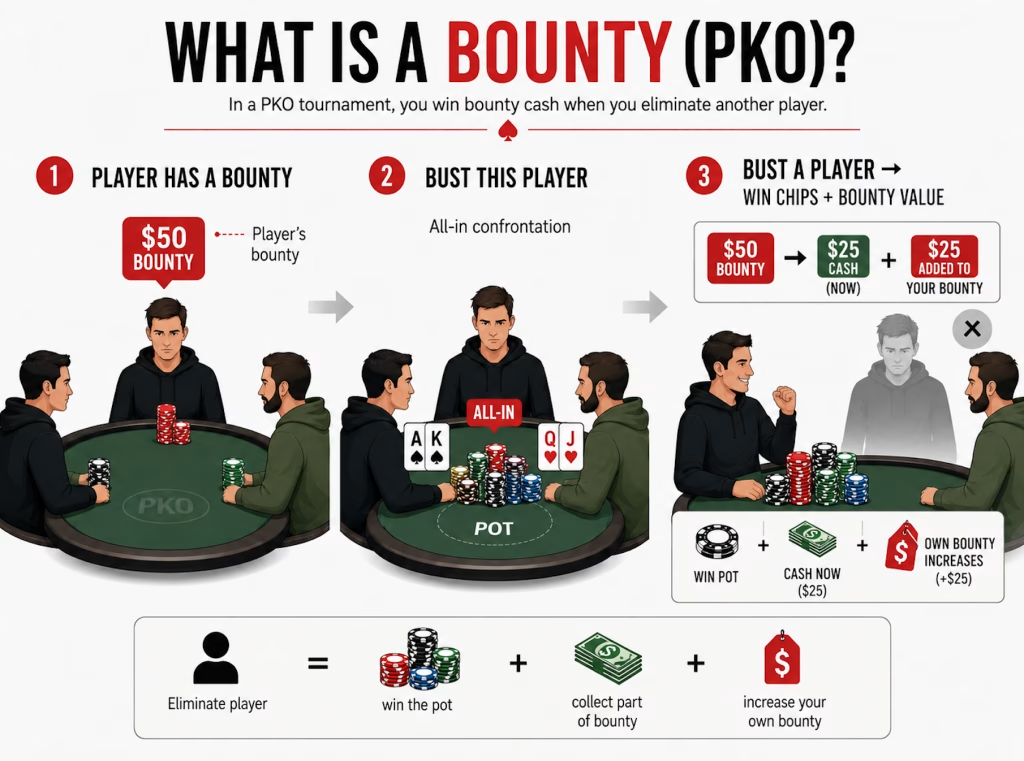
In knockout poker games and tournaments, every all-in can touch two prize pools at the same time. One part of the decision still comes from ordinary placement value. Lose chips late and your path to the next pay jump gets worse. Win chips and your future finish improves. That is familiar.
The second part comes from bounty value, and that piece behaves very differently. If you bust a player, you realize immediate cash and often increase the value attached to your own stack for later hands. Suddenly the pot is larger in money terms than the chip count alone suggests.
The old calling question is no longer enough
That is why the old question, “Am I ahead often enough to call?”, needs a wider frame. You also need to ask:
- who covers whom
- how much of the bounty is claimable now
- how much future pressure your new stack can create after the hand
A medium stack covering a short stack often has far more freedom than the same stack would have in a standard event. A covered stack, on the other hand, cannot treat survival as the only goal either, because doubling can reopen access to bounty value in future hands.
In this sense, knockout poker becomes its own strategic world. The correct call is often driven by a moving balance between survival pressure and bounty pressure. Early on, bounty value can pull ranges wider. Later, pay jumps push back. Near the final table, the right answer depends less on whether a hand “looks strong” and more on whether the combined value of:
- chips
- bounty cash
- future leverage
clears the real threshold in that exact spot. When players miss that balance, they keep folding hands that earn in PKOs even when those same hands would stay in the muck elsewhere.
Bigger fields have made precision more valuable
The modern tournament environment has raised the cost of getting this wrong. When flagship fields grow, each late stage decision carries more weight because more money is packed into each surviving rung. The numbers over the last four years show how large the stage has become, even with 2025 cooling slightly from the 2024 peak.
| Year | Entries | Prize pool |
| 2022 | 8,663 | $80,782,475 |
| 2023 | 10,043 | $93,399,900 |
| 2024 | 10,112 | $94,041,600 |
| 2025 | 9,735 | $90,535,500 |
Why do we bring up these numbers? Because bigger fields create two layers of pressure. First, they make late survival worth more in pure payout terms. Second, they reward players who know exactly when bounty value should push them toward a call. In other words, the edge is no longer about being “loose” in bounty spots but about being accurate.
That accuracy shows up most clearly in stack interaction. A chip leader in a PKO does not just threaten elimination. That player can also claim immediate cash and grow future bounty value by winning the right confrontations. Middle stacks face the hardest work because they are often pulled in both directions.
They want to preserve ladder potential, but they also have many of the best bounty claim spots at the table. Short stacks feel the squeeze in a different way. Their fold equity matters, yet their double up potential can be worth more than many standard tournament habits allow for. The more crowded and top heavy the field, the more those small misreads compound.
The new edge is mental flexibility
The strongest PKO players do not carry one fixed ICM rulebook from level to level. They treat the format like a shifting set of weights. The balance changes with stack depth, bounty size, payout stage, and table shape. That is why static advice ages badly in this format. A hand that prints early can become a trap later. A fold that saves you in one orbit can cost you in the next.
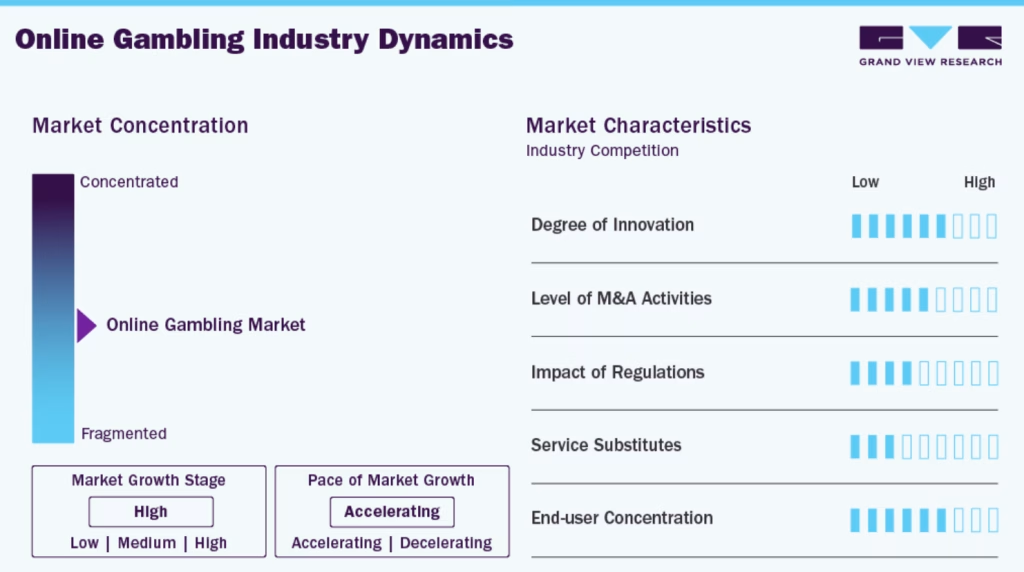
That approach fits the wider direction of the market as well. Grand View Research estimated the global online gambling market at $87.69 billion in 2025, up from $78.66 billion in 2024, with projected growth of 11.9% annually through 2030. The biggest impact belongs to innovation in this industry.
Poker author Dara O’Kearney captures the core idea well when he says that in PKOs, “these two forces pull you in different directions.” That is the mindset adjustment many players still resist. They want one clean answer for a call or fold. PKOs reward the player who accepts a moving answer and recalculates it faster than the table.
Why Knockout Tournaments Draw More Interest Today
Part of the appeal is simple: the format gives players more to play for in every all-in, whether they are a fish or a shark in the game (see the meme, you will get it).
A standard tournament often asks people to wait for value to build through survival and laddering. A knockout event adds an immediate cash layer that is easy to understand and easy to feel at the table. That creates faster feedback, clearer moments of tension, and more visible rewards during a long session. It also fits a wider market trend.
That does not mean every player is choosing bounty formats first, but it does show a large and active tournament base that keeps looking for formats with strong emotional payoff and clear competitive stakes. In that environment, knockout events make sense because they turn many routine confrontations into moments that feel meaningful right away.
The appetite also shows up below the highest buy-in level. Knockout tournaments fit that mood well because they keep the table dynamic, reward aggression with a visible cash result, and give both players and railbirds a simple story to track hand by hand.